Prelude To The Great War

The Great War, The War to end All Wars , The Seminal Tragedy were some of the names given to World War one. The shift in the balance of power after the Franco-Prussian war caused a series of events which ultimately lead to World War One and all the destruction that followed.

1871

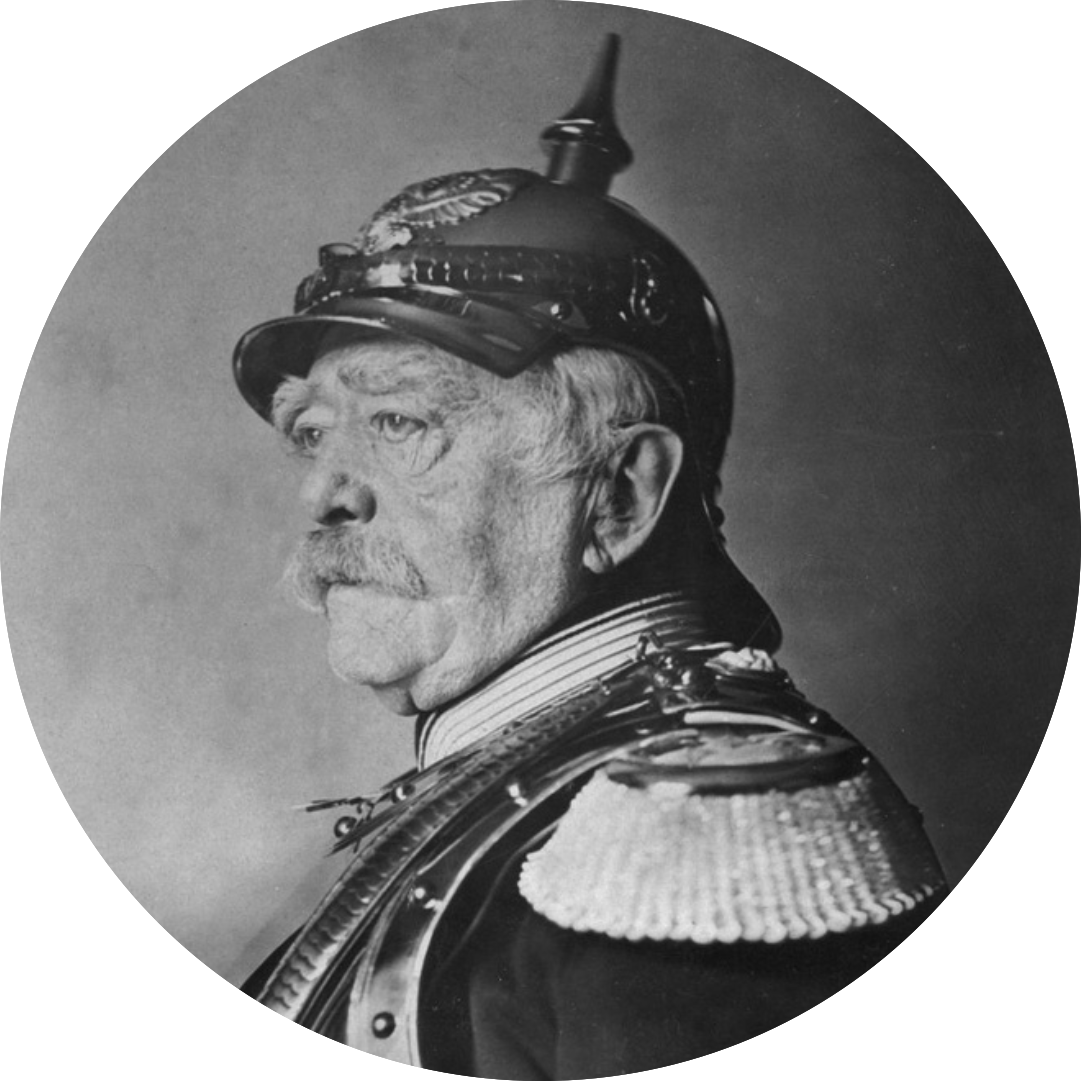
Franco-Prussian War ends with Otto Von Bismarck along with Von Moltke the Elder help Prussia emerge victorious. Germany gained control of Alsace-Lorraine as a result of the Franco-Prussian War. The area was formally ceded to Germany by France with the signing of the Treaty of Frankfurt on May 10, 1871. This ensured that France would never side with Germany.


1873

The League of the Three Emperors or Union of the Three Emperors comes into being. Beginning in 1873, the German, Russian, and Austro-Hungarian Empires formed an alliance. A hostile alliance between Austria, France, and Russia would destroy Germany, in Bismarck's opinion. If two of them were allies, the third would only join forces with Germany if Germany gave in to unreasonable demands. The answer was to form an alliance with two of the three. He established the League of the Three Emperors in 1873, an association of the Tsar of Russia, the Kaisers of Germany and Austria-Hungary.


1878

The collective dissolved in 1878 due to conflicts over Balkan territories. Austria-Hungary was concerned that Russian backing of Serbia could incite nationalist sentiments among Slavic populations. Similarly, Russian authorities were worried about potential uprisings if a Pan-Slavic movement gained significant influence. .

1879

1879 saw the signing of the Dual-Alliance between Austria-Hungary and Germany. The two nations made a commitment to provide mutual assistance in the event of an attack by Russia. Additionally, they pledged to maintain a friendly stance if either of them was attacked by another European power, particularly France. Bismarck viewed the alliance as a means to prevent Germany's isolation, given its recent establishment, and to ensure peace by discouraging Russia from engaging in hostilities against both empires.

1882

The Triple-Alliance Treaty was signed which saw the inclusion of Italy in the above Treaty. The treaty provided that Germany and Austria-Hungary were to assist Italy if it was attacked by France without provocation. In turn, Italy would assist Germany if attacked by France. In the event of a war between Austria-Hungary and Russia, Italy promised to remain neutral. .


1887

The Reinsurance Treaty was a confidential diplomatic pact between the German Empire and the Russian Empire from 1887 to 1890. Its existence was known only to a select few officials in Berlin and St. Petersburg due to its secretive nature. The treaty stipulated that both nations would remain neutral if the other became engaged in a conflict with a major power, except in the case of Germany attacking France or Russia attacking Austria-Hungary. .


1890

Otto Von Bismarck is removed as chancellor by the hotheaded new Kaiser of Germany,Wilhem II. .


1890

Following Bismarck's fall from power in 1890, his opponents within the Foreign Ministry persuaded Kaiser Wilhelm II that the treaty favored Russia excessively and should not be extended. The termination of the treaty, much like its existence, was kept completely confidential. Russia, however, desired the security provided by the treaty and was displeased by its cancellation. .


1891

Russia was displeased by the withdrawal of the Reinsurance Treaty and started to look for new allies this caused the signing of the Franco-Russian Alliance .


1914

Heir to the Austro-Hungarian throne, Archduke Franz Ferdinand is Assasinated by a Serbian national Gavrilo Princip. .


1914- The July Crisis

1. July 23: Austria-Hungary presents Serbia with an ultimatum, accusing them of supporting the assassins and demanding strict compliance with its terms.
2. July 25: Serbia agrees to most of the demands in the ultimatum but seeks clarification on certain points.
3. July 28: Austria-Hungary rejects Serbia's response and declares war on Serbia.
4. July 29: Russia, allied with Serbia, partially mobilizes its military forces in response to Austria-Hungary's aggression.
5. July 30: Germany, allied with Austria-Hungary, issues an ultimatum to Russia demanding an end to its mobilization.
6. July 31: Russia refuses Germany's ultimatum, and Germany declares a state of war with Russia.
7. July 31: Germany sends a similar ultimatum to France, demanding neutrality in the upcoming conflict. France rejects the demand.
8. August 1: Germany declares war on France and begins its invasion.
9. August 3: Germany declares war on Russia.
10. August 4: Germany invades Belgium to gain access to France, violating Belgium's neutrality and prompting Britain to declare war on Germany. .