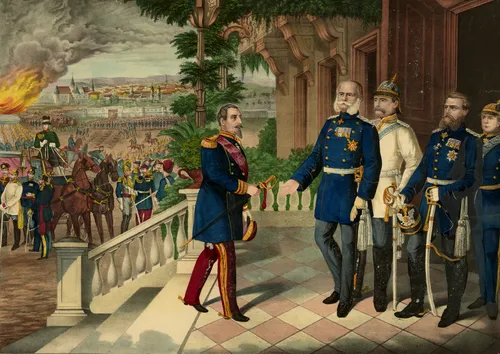
Prussia and Denmark, neighboring European powers, were entangled in significant historical rivalries during the 19th century. The conflicts were primarily centered around the contentious Schleswig-Holstein Question, which revolved around the status of the duchies of Schleswig and Holstein. Both nations laid claim to these territories due to their unique linguistic and cultural identities. These rivalries led to two major military confrontations: the First Schleswig War and the Second Schleswig War. These conflicts shaped the geopolitical landscape of the time and had profound consequences for the territories involved. Despite the intensity of these historical rivalries, in the present day, Germany (including former Prussian territories) and Denmark maintain peaceful and cooperative relations as neighboring countries and members of the European Union, reflecting the progress made in resolving past conflicts and fostering diplomatic ties.
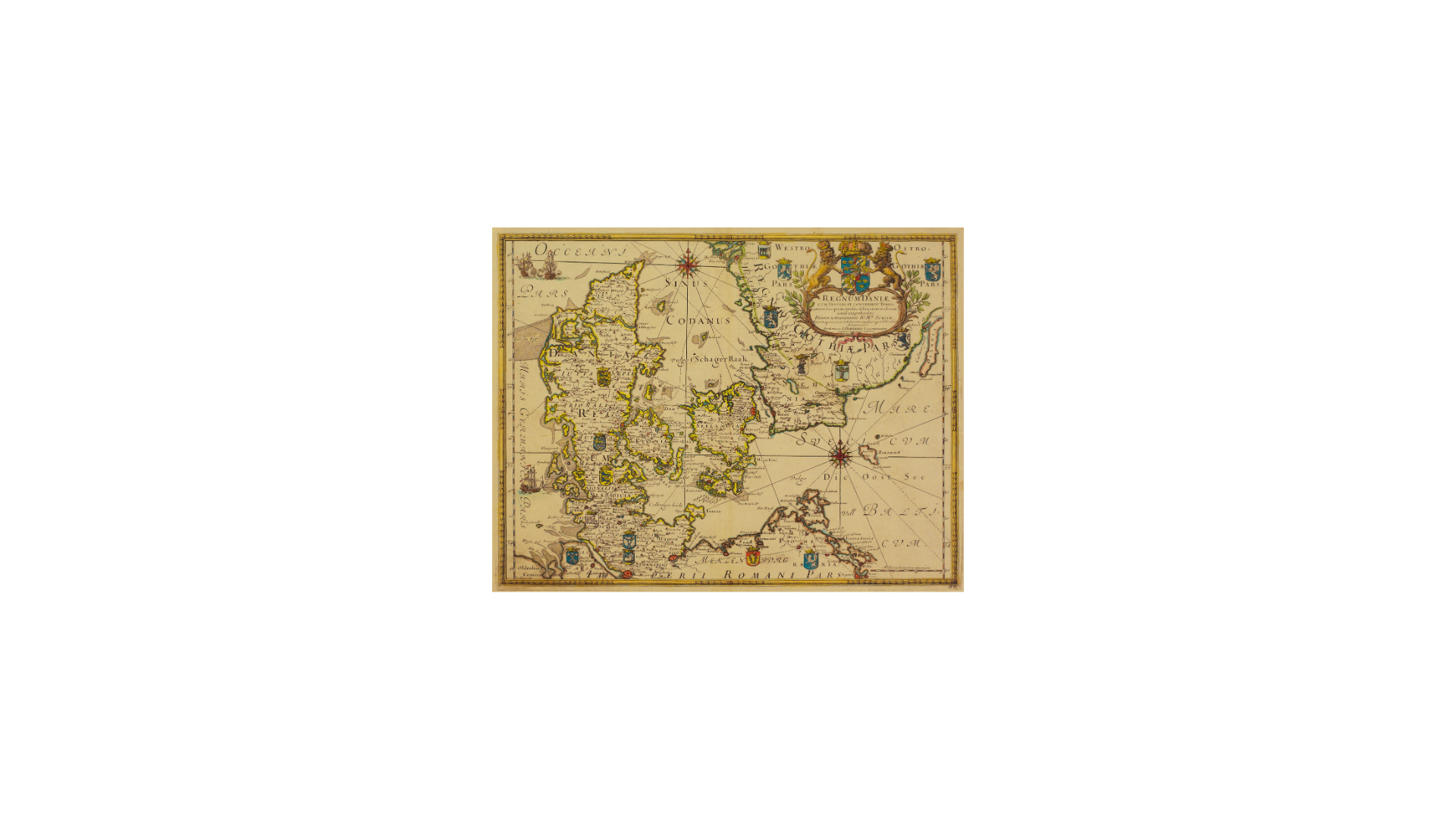
The Schleswig-Holstein Question was a major point of contention between Prussia and Denmark during the 19th century. It centered around the status of the duchies of Schleswig and Holstein, which were located in the northern region of the German Confederation. Schleswig and Holstein held historical, linguistic, and cultural ties to Denmark, while also having a significant German-speaking population. Denmark claimed the duchies as part of its kingdom, emphasizing the shared cultural heritage. On the other hand, Prussia, as the dominant German state, asserted its interest in the duchies due to the German-speaking majority in Holstein. The conflicting claims over Schleswig and Holstein escalated tensions between Prussia and Denmark, leading to rebellions in the duchies against Danish rule. These rebellions and the differing national aspirations of the populations fueled the outbreak of the First Schleswig War in 1848. Subsequently, the Second Schleswig War in 1864 resulted in Denmark ceding the duchies to Prussia and Austria, further strengthening Prussia's position as a leading German power.

The broader historical context of Prussia and Denmark's rivalry was shaped by the complex geopolitics of 19th-century Europe. Nationalism was on the rise, and both powers sought to assert their influence over the Schleswig-Holstein region, which had dual cultural and linguistic ties. The Napoleonic Wars and Congress of Vienna (1814-1815) also played a role, as territorial reconfigurations led to Denmark's control over the duchies being challenged by Prussia. The rivalries contributed to regional tensions and, ultimately, the outbreak of the First Schleswig War in 1848 and the Second Schleswig War in 1864. These conflicts influenced the balance of power in Europe, leading to Prussia's ascendancy and eventual German unification in 1871, altering the continent's geopolitical landscape.
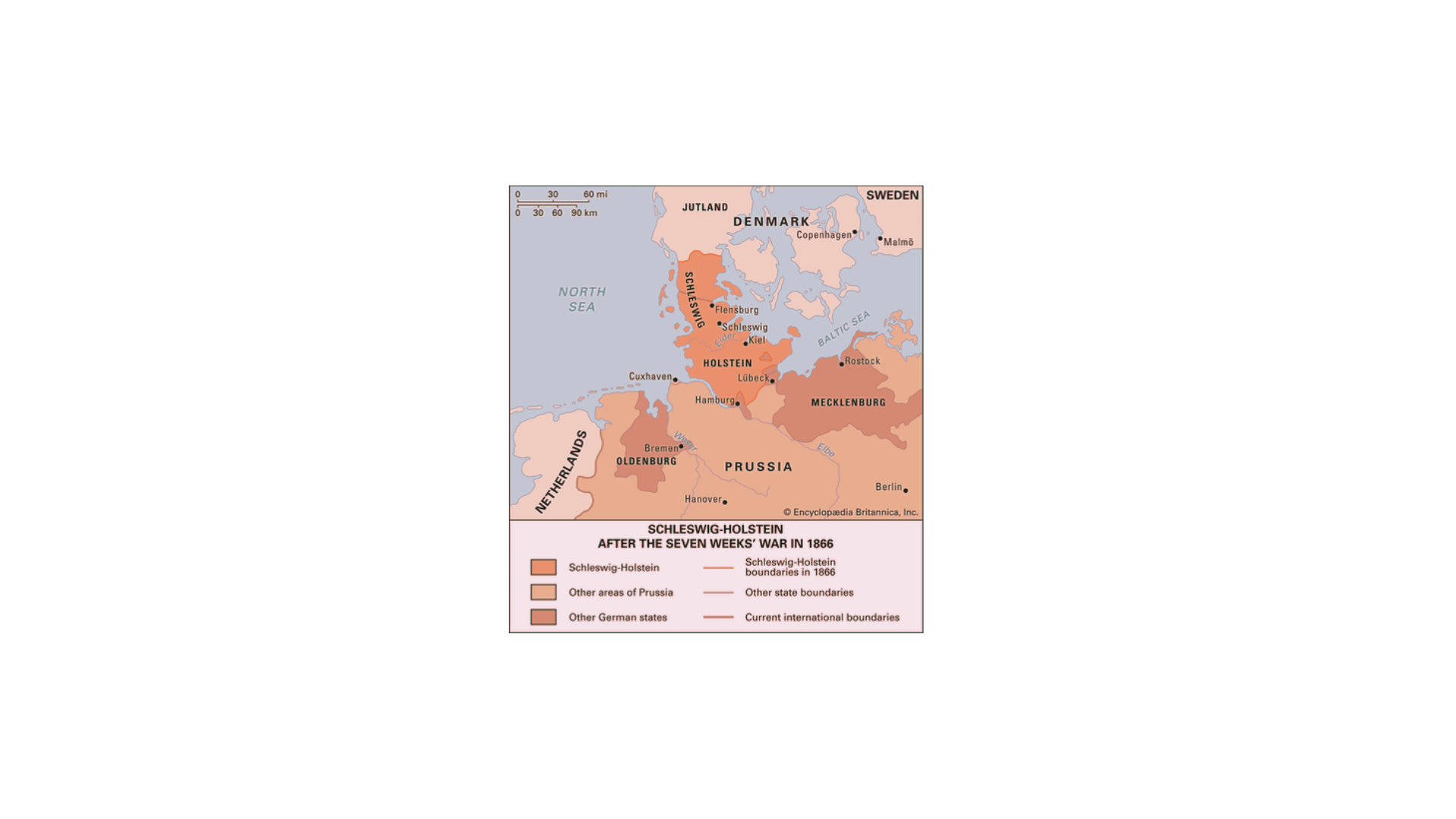
The First Schleswig War (1848-1851) and the Second Schleswig War (1864) were pivotal conflicts between Prussia and Denmark over the Schleswig-Holstein region. The First Schleswig War erupted due to nationalist uprisings in Schleswig and Holstein against Danish rule. Although Denmark initially won, tensions resurged, leading to the Second Schleswig War. This time, Denmark aimed to incorporate Schleswig into its kingdom, provoking Prussia and Austria's intervention as allies against Denmark. Prussia's military might played a crucial role in both wars. In the First Schleswig War, Denmark's victory was aided by British and Russian diplomatic efforts, preserving the duchies' nominal autonomy under Danish rule. However, in the Second Schleswig War, Prussia's powerful military led to Denmark's defeat. The conflict resulted in the Treaty of Vienna, with Denmark ceding the duchies to Prussia and Austria. Austria later ceded its share to Prussia, strengthening Prussia's position and paving the way for German unification in 1871.